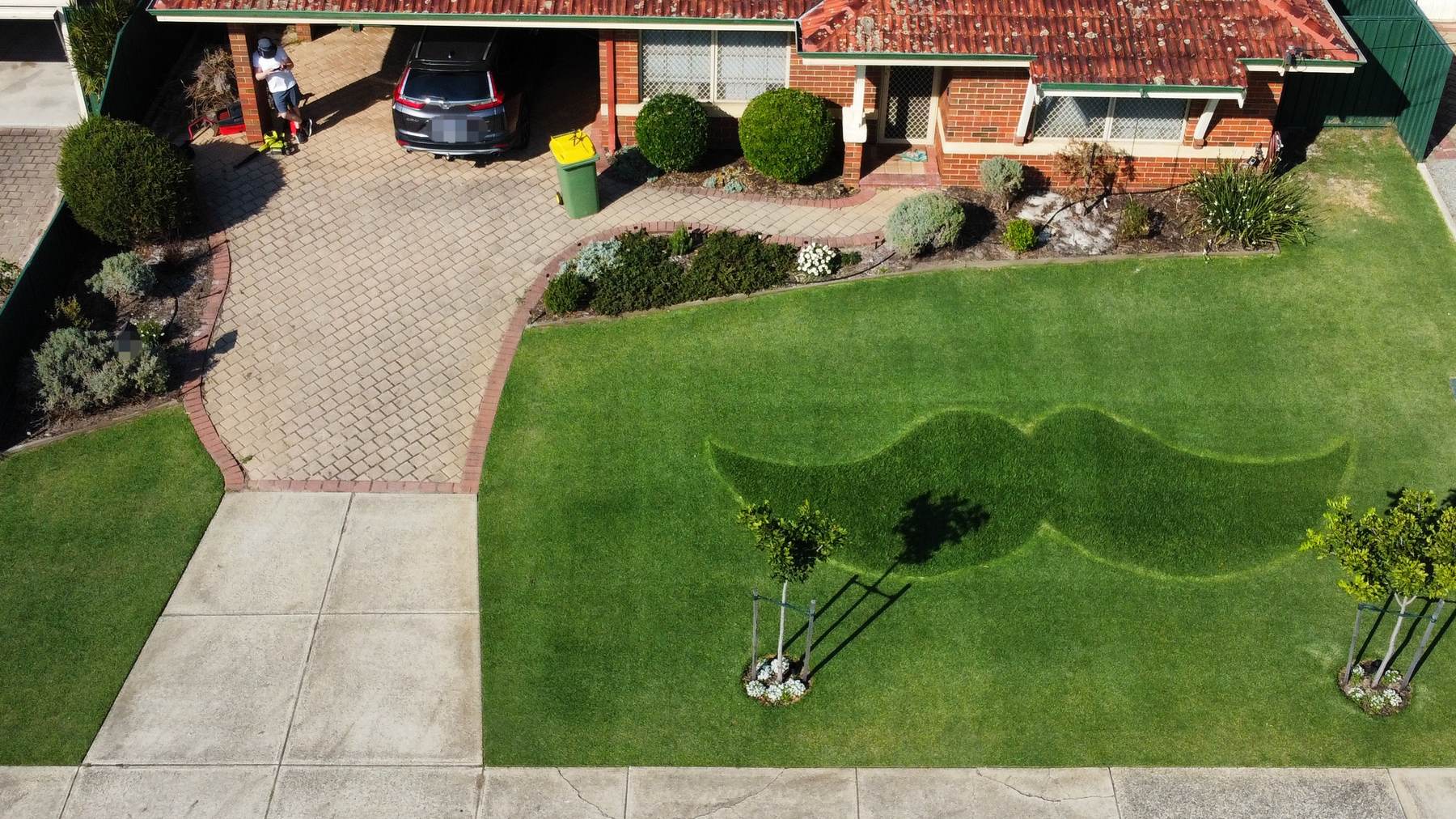
Perth, Western Australia
Just a dad doing backyard things.
Lawns, DIY and whatever else I have talked myself into this month. Everything I use is here, and most of it is free.
Free. No sign up. Nothing locked behind a subscription.
Not an app person? Use the calculators instead.
The lawn app
Feed less. Mow less.
Bag rates are generous, and following them usually means overfeeding. That does not get you a better lawn, it gets you a faster one: more mowing, more clippings, more thatch, and a dethatch you did not need. This works out what your grass can actually use in a year and splits it across your feeds, so you buy less and mow less.
- Works out every dose for your lawn, from its size and grass type
- Turns label rates into what actually goes in your sprayer, not litres per hectare
- Counts the nitrogen you have used this year, so you cannot overfeed
- Reads the soil temperature where you live, so you feed when the grass can actually use it
- Calls the pre-emergent window off soil temperature instead of the calendar
- Checks spray conditions before you go out: wind, heat and rain on the way
- Tells you what is due and when, across as many lawns as you like
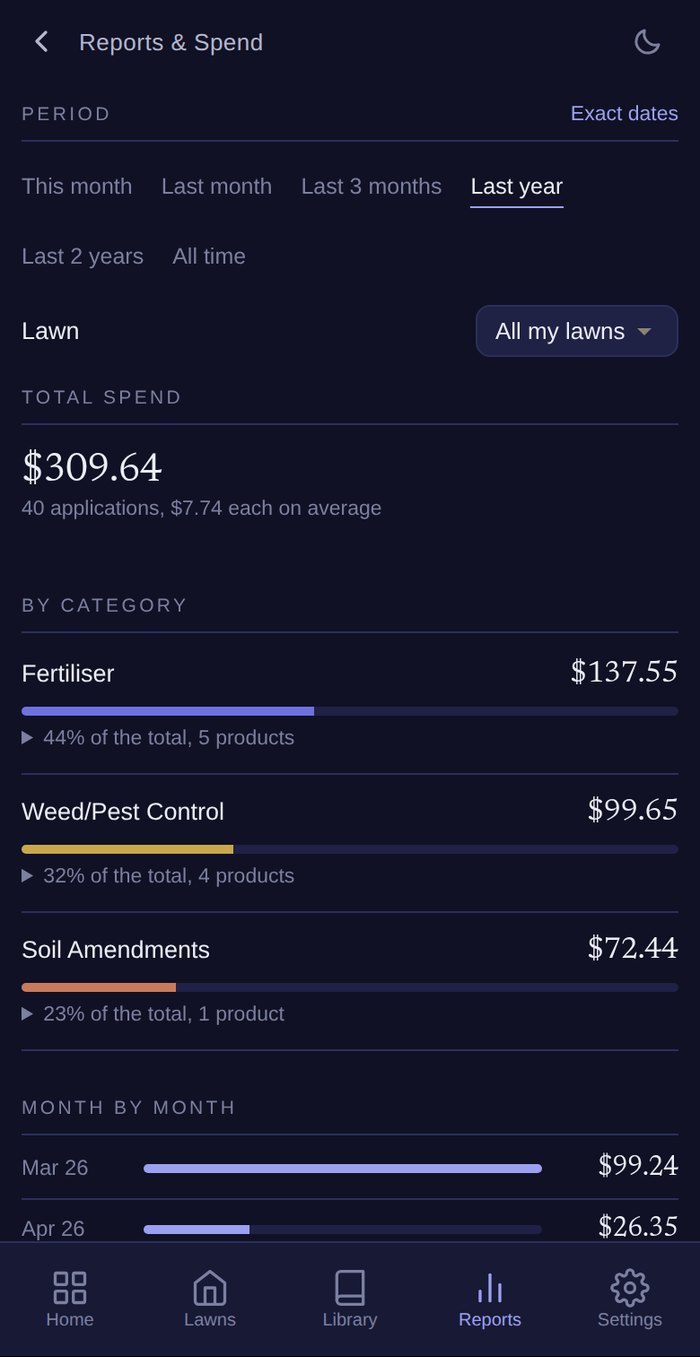
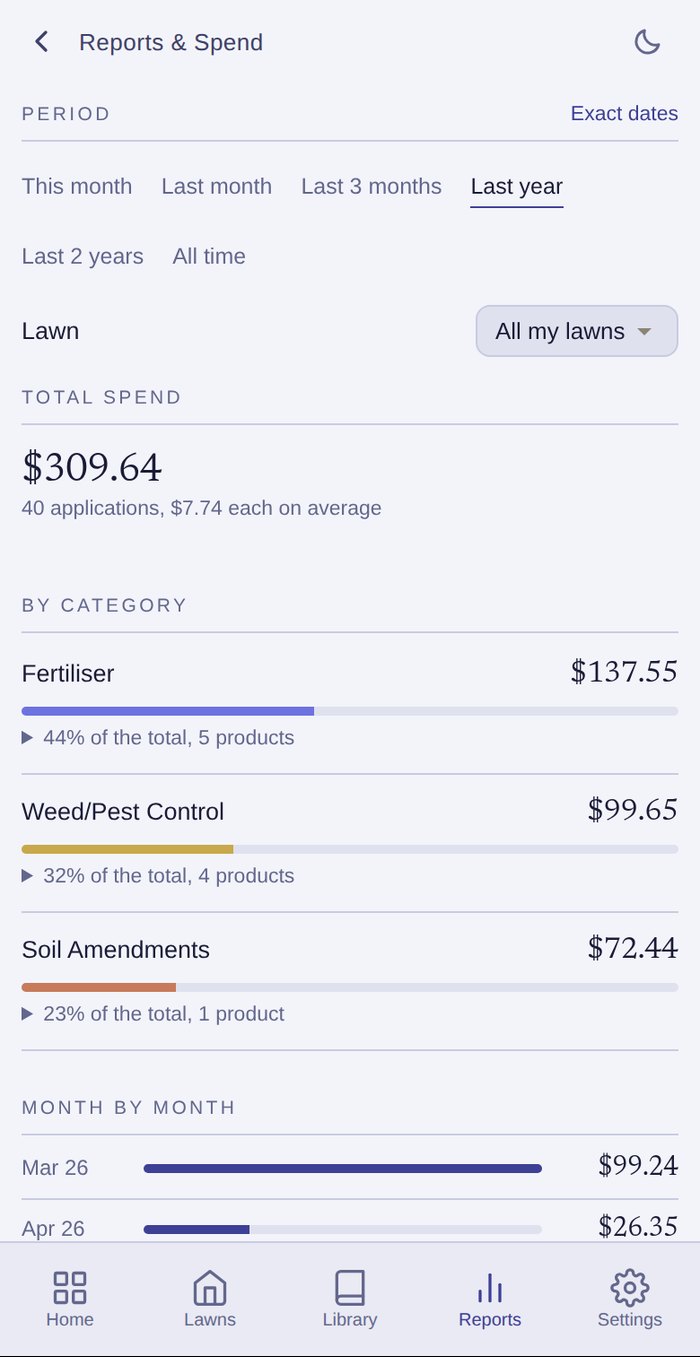
- Keeps a product library, a spray log and what it all cost
- Monthly tips written for Perth, including the winter sprinkler ban
- No account, no Pro tier, works offline, and your data stays on your phone
Every feature is free. There is no paid tier to unlock, nothing is held back, and it never asks you for an account before it will save your work.
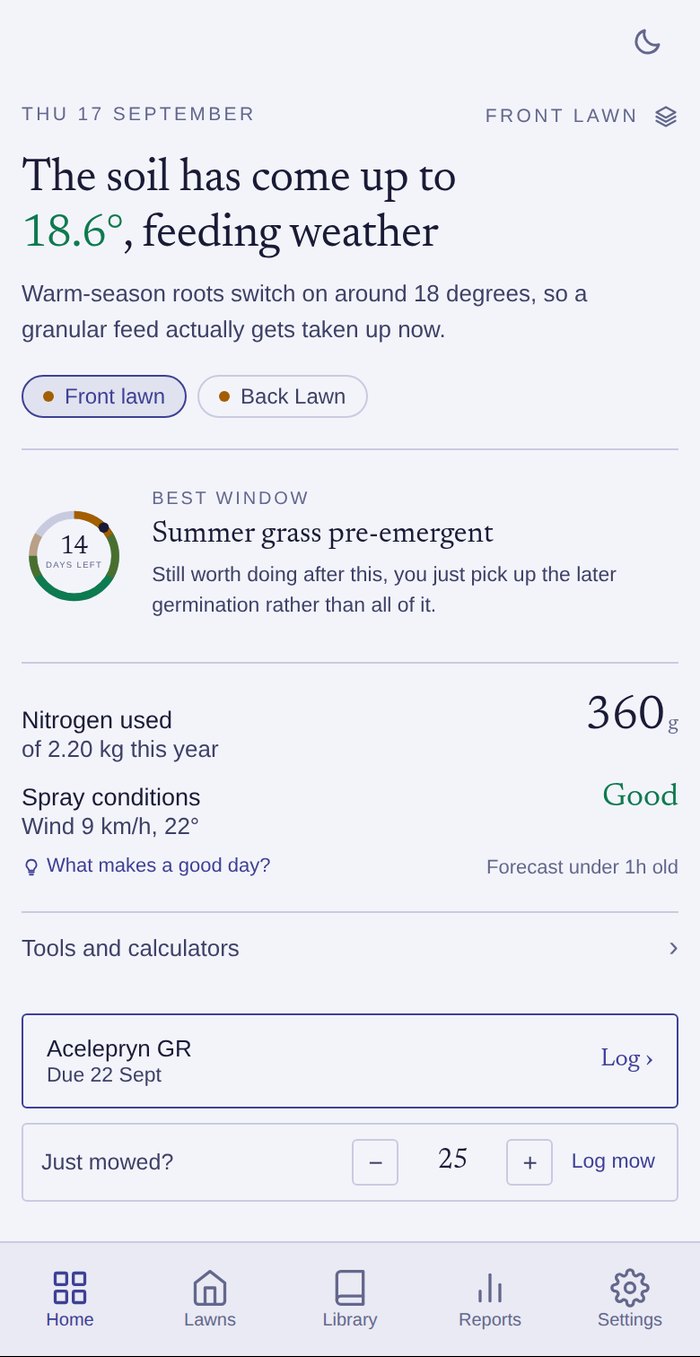
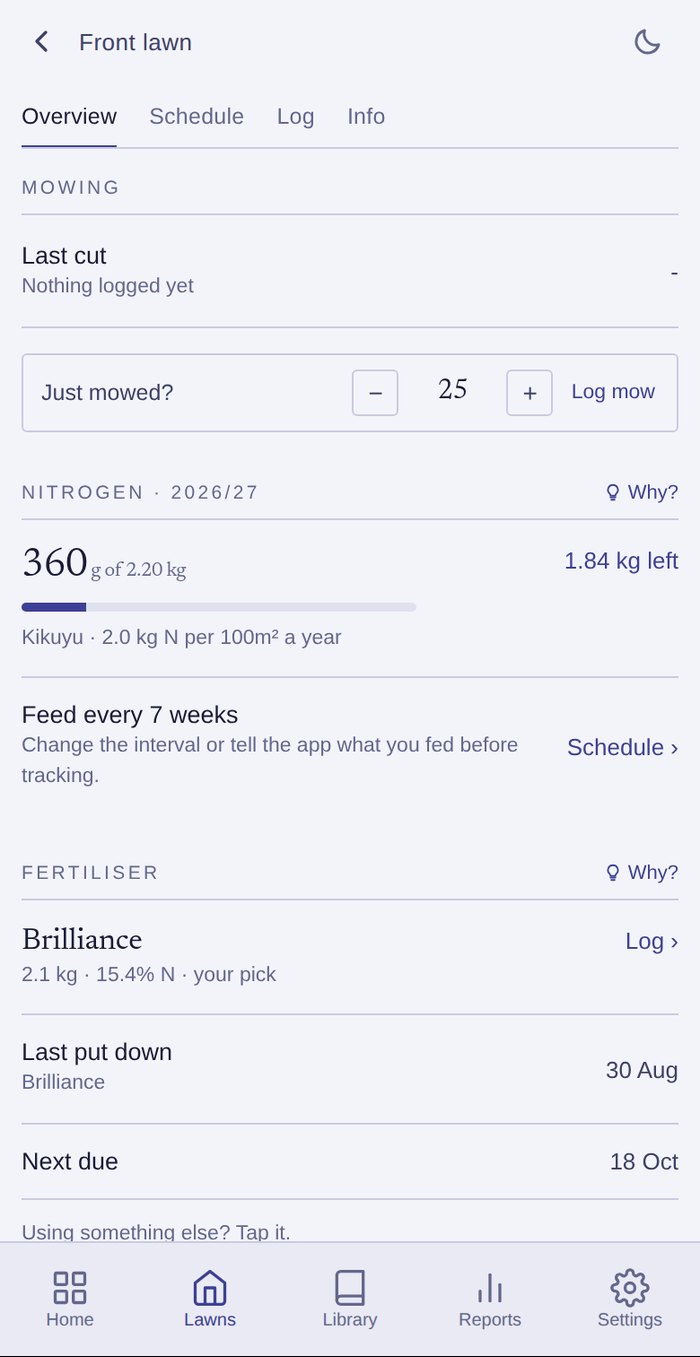
It does light mode too
Worked examples
Four things it does, with the numbers in.
Real output from a real lawn, 110 square metres of kikuyu. Nothing here is a mockup, it is the same layout you get on the phone.
A label rate is per hectare. Your knapsack is not.
Walk your sprayer over a measured patch at your normal pace and note how much water you got through. That one number is all it needs. From then on it turns any label rate into what actually goes in the tank for a given lawn, and into millilitres per litre if you are spot spraying out of a handheld bottle.
You do it once. You redo it if you change a nozzle.
Which is 10 mL per litre of water, whatever size bottle you pick up.
Doses sized to your grass, not to the bag.
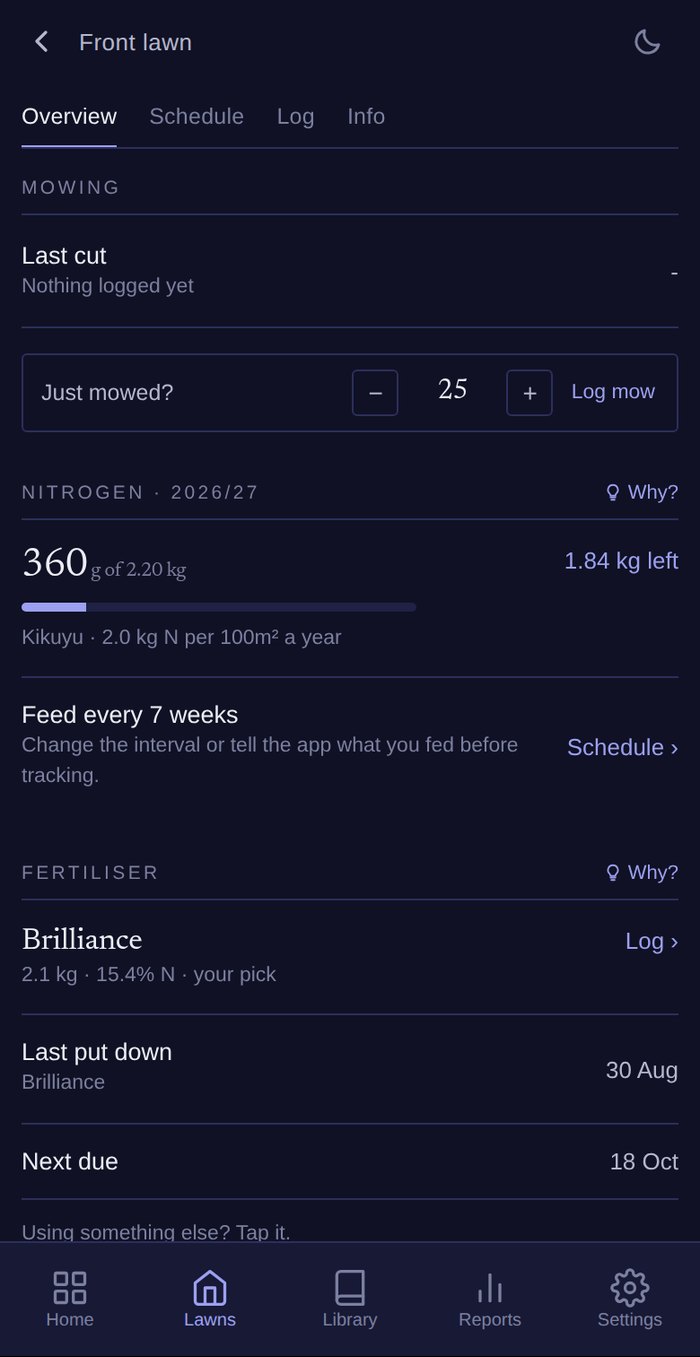
Every grass type has a figure for how much nitrogen it can actually use in a year. The app takes that, scales it to your lawn's size, and divides it across however often you feed. Each dose comes out already sized to fit. Feed more often and each one gets smaller, and the yearly total does not move.
Kikuyu and couch want different amounts, and a 15% bag and a 20% bag are different again. It handles all of that, so the number you get is for your lawn and the product in your hand.
Sized to the budget, not to the back of the bag.
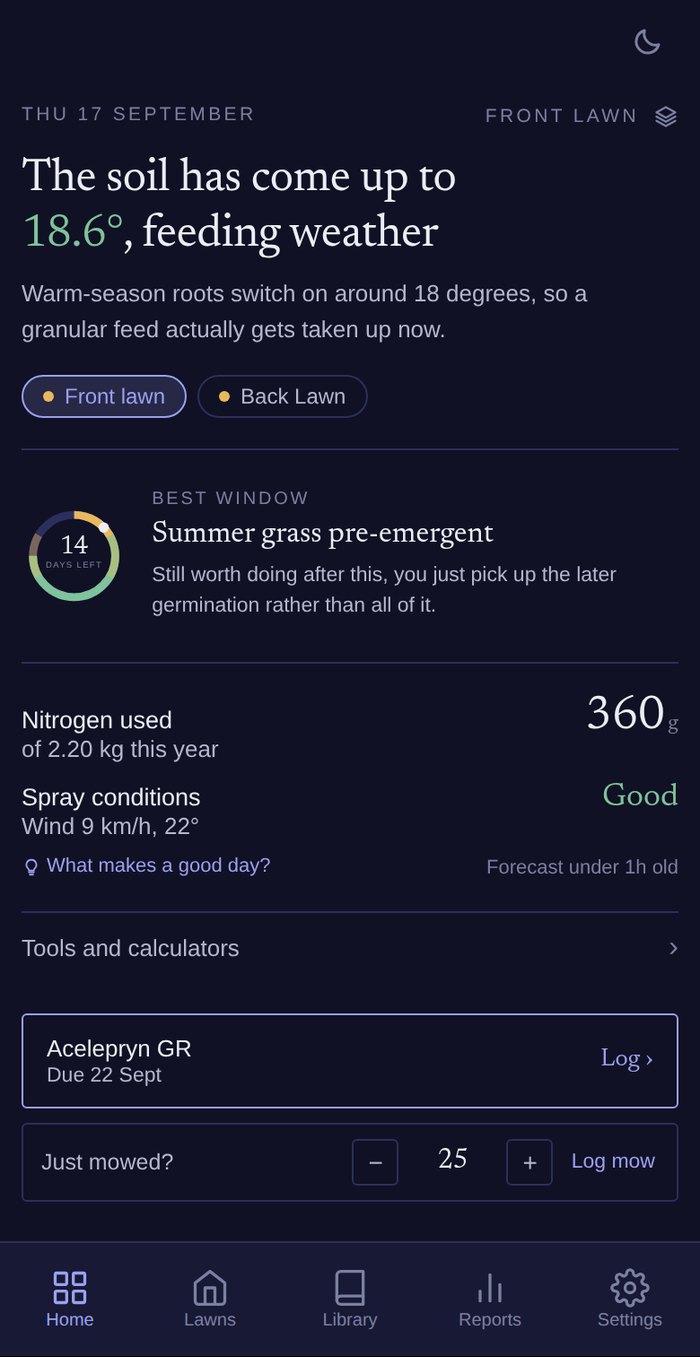
The calendar has no idea what your soil is doing.
Warm-season grass takes nitrogen up through its roots, and those roots do very little until the soil sits around 18 degrees. Put a granular down before that and a good part of the bag is just waiting, or washing past. The app reads the soil temperature for your location every day and tells you where you are up to.
It checks the same forecast before you spray: wind, heat, and whether rain is coming.
The soil has come up to 18.6°, feeding weather
Warm-season roots switch on around 18 degrees, so a granular feed actually gets taken up now.
It watches the soil so you catch the window.
Pre-emergents work on seed as it germinates, so the earlier they go down the more of the flush they pick up. Germination tracks soil temperature rather than the date, so the app watches for the crossing and tells you how much runway is left. Get in late and it still earns its keep, you catch what germinates from then on instead of the lot.
Summer grass goes at about 13 degrees on the way up, crowsfoot at 16, winter grass at 21 on the way down. Log one and the app stops prompting and starts telling you what is still covered, so you know where a second application fits.
Summer grass pre-emergent
Soil at 6cm is 12.4°C and heading up through 13°C in about 6 days.
Down before the crossing catches the whole flush, so this fortnight is the best of it. Still worth doing after, you just pick up the later germination rather than all of it.
If you would rather not
Just the calculators, then.
Same maths, pulled out of the app and put on their own pages. Nothing to install, nothing to sign up for. Each one does a single sum and forgets it, which is the bit the app fixes, but if you only need a number then here you go.
What I use
The answer to the question I get most.
Nobody pays me to say any of this. It is just what is in my shed. Fertiliser changes with the season, so I have left that off, it is in the app instead.